TMS Therapy
TMS
Therapy
Insurances Accepted
Our team can confirm your benefits and
guide you through your options.






Conditions
TMS Treat
Major Depressive Disorder (MDD)
Persistent depression can affect mood, energy, motivation, and daily functioning.
Common signs:
- Persistent sadness
- Loss of interest
- Fatigue
- Difficulty concentrating
Treatment-Resistant Depression (TRD)
Treatment-resistant depression means symptoms continue despite trying at least two antidepressants at adequate dose and duration.
Common signs:
- Persistent sadness
- Ongoing low mood
- Minimal response to medication
- Loss of motivation
Migraines & Headaches
Chronic or severe headaches can impact daily life, causing pain, fatigue, and difficulty functioning. Professional care can help reduce symptoms and improve quality of life.
Common signs:
- Recurrent or intense head pain
- Sensitivity to light or sound
- Nausea or dizziness
- Difficulty concentrating or performing daily tasks
Treatment:
- TMS may help for certain chronic migraine patterns
PTSD
Post-traumatic stress disorder may develop after trauma and can affect mood, sleep, and sense of safety.
Common signs:
- Flashbacks
- Nightmares
- Hypervigilance
- Avoidance
OCD
Obsessive-compulsive disorder involves intrusive thoughts and repetitive behaviors that can interfere with daily life.
Common signs:
- Intrusive thoughts
- Repetitive checking
- Excessive cleaning
- Mental rituals
Anxiety
Anxiety can cause persistent worry, physical tension, and difficulty managing daily stress. Advanced therapies may help when symptoms remain severe.
Common signs:
- Excessive worry
- Restlessness
- Muscle tension
- Racing thoughts
Trauma-Related Symptoms
Trauma can affect emotional regulation, safety, and daily functioning long after a difficult experience.
Common signs:
- Emotional numbness
- Hypervigilance
- Irritability
- Avoidance
Sleep Disturbances
Sleep problems often occur alongside depression, anxiety, and trauma-related conditions. Improving the underlying condition may improve sleep.
Common signs:
- Difficulty falling asleep
- Frequent waking
- Early morning waking
- Daytime fatigue
A Non Medication Pathway to Lasting Relief for Depression and Mood Disorders
TMSTherapy
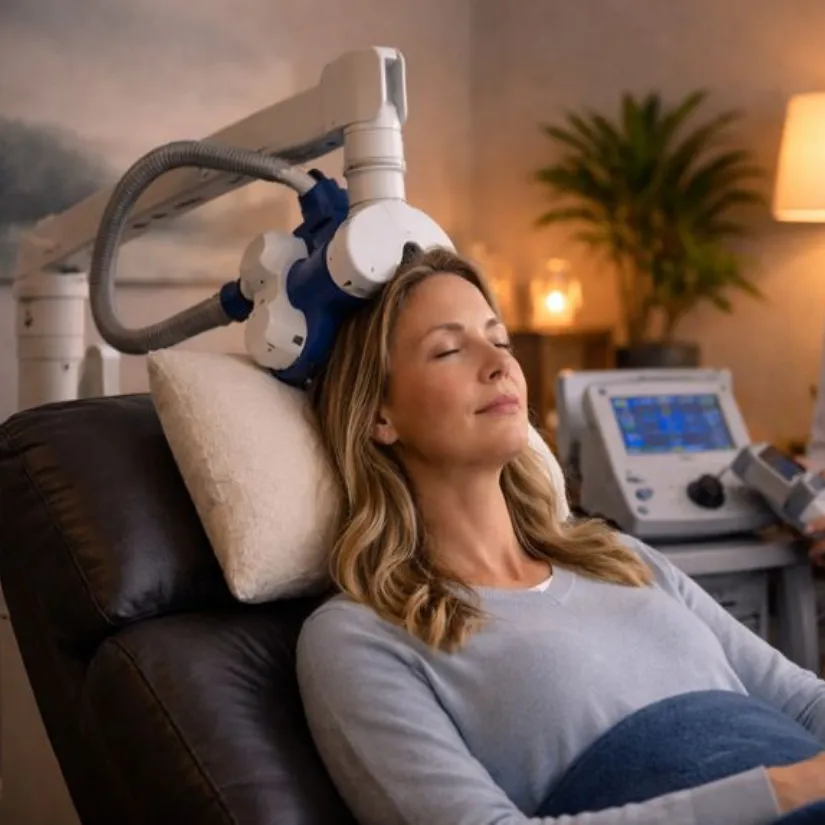
TMS (Transcranial Magnetic Stimulation) a safe, non-invasive, and highly effective therapy for individuals struggling with depression and mood disorders—especially when traditional treatments haven’t brought meaningful improvement. Using gentle, targeted magnetic pulses, TMS activates the areas of the brain responsible for regulating mood, helping restore healthy neural activity.
By reawakening these pathways, TMS can reduce depressive symptoms, sharpen focus, improve emotional balance, and increase daily motivation. Many patients begin to feel more hopeful, more present, and more like themselves again as treatment progresses.
At Attuned Psychiatry, every TMS session takes place in a calm and supportive environment. Our clinical team guides your care with compassion and precision, ensuring comfort, safety, and steady progress throughout the entire process.
Why Choose Us for TMS Therapy?


How TMS Therapy Works
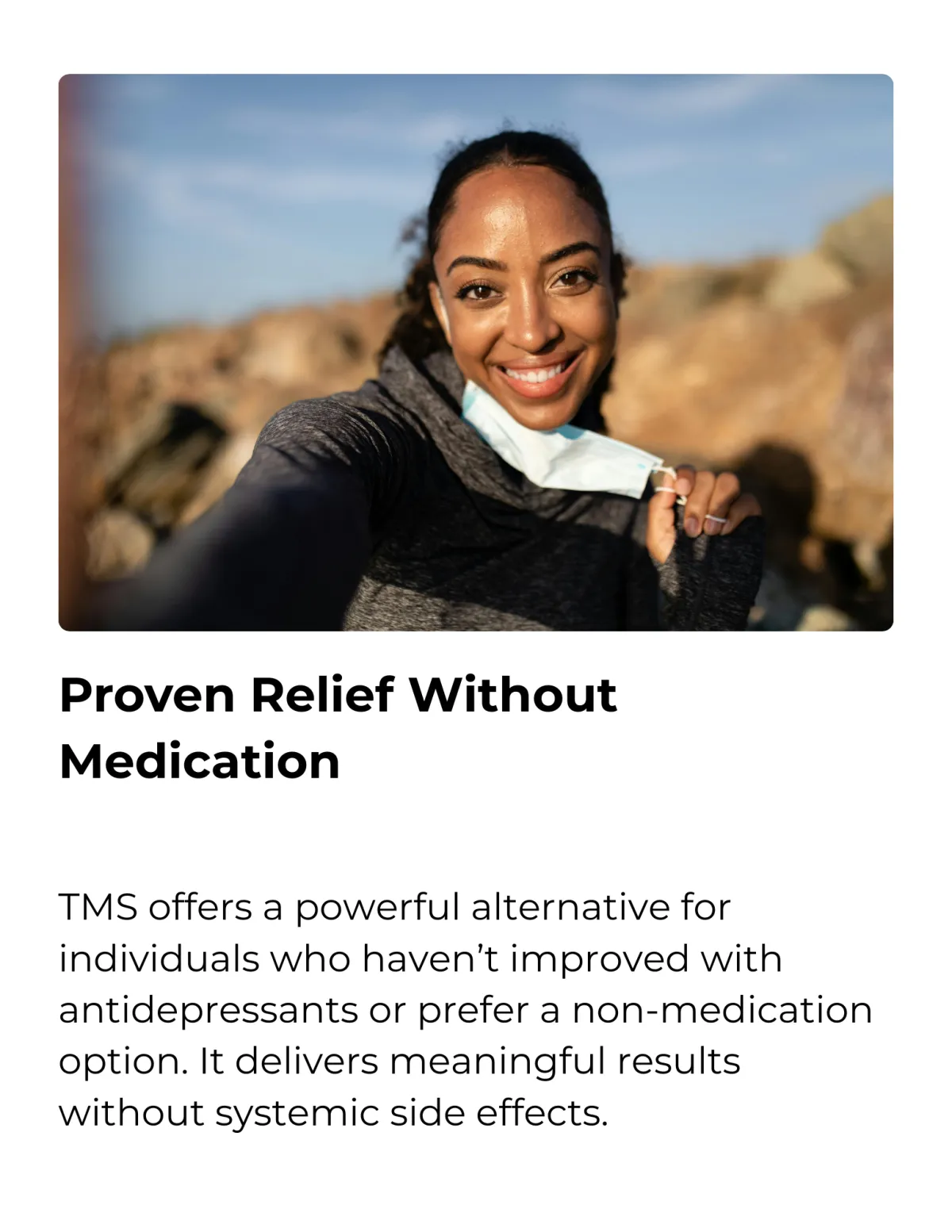
TMS is non-invasive and requires no anesthesia or sedation.
You can drive yourself to and from sessions and resume daily activities immediately.
During treatment, you’ll sit comfortably while the TMS coil is positioned over specific areas of the brain. You may hear clicking sounds or feel a tapping sensation, which most patients find very tolerable. Mild headaches can occur during the first few sessions but typically resolve quickly.
What to Expect on Your Care Journey
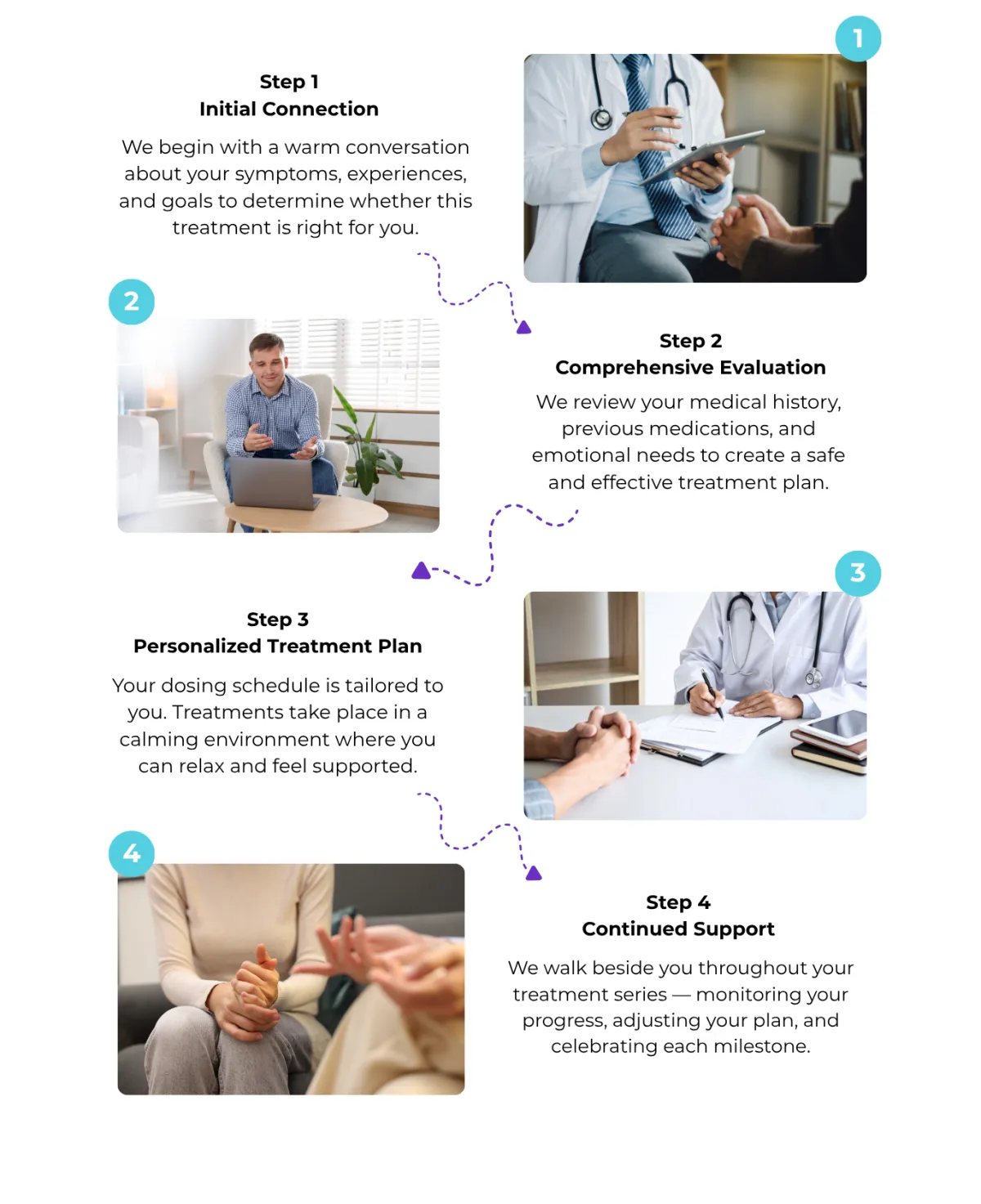
Step 1
Initial Connection
We begin with a warm conversation about your symptoms, experiences, and goals to determine whether this treatment is right for you.
Step 2
Comprehensive Evaluation
We review your medical history, previous medications, and emotional needs to create a safe and effective treatment plan.
Step 3
Personalized Treatment Plan
Your dosing schedule is tailored to you. Treatments take place in a calming environment where you can relax and feel supported.
Step 4
Continued Support
We walk beside you throughout your treatment series — monitoring your progress, adjusting your plan, and celebrating each milestone.
Brain Changes After
Advanced Depression Treatments
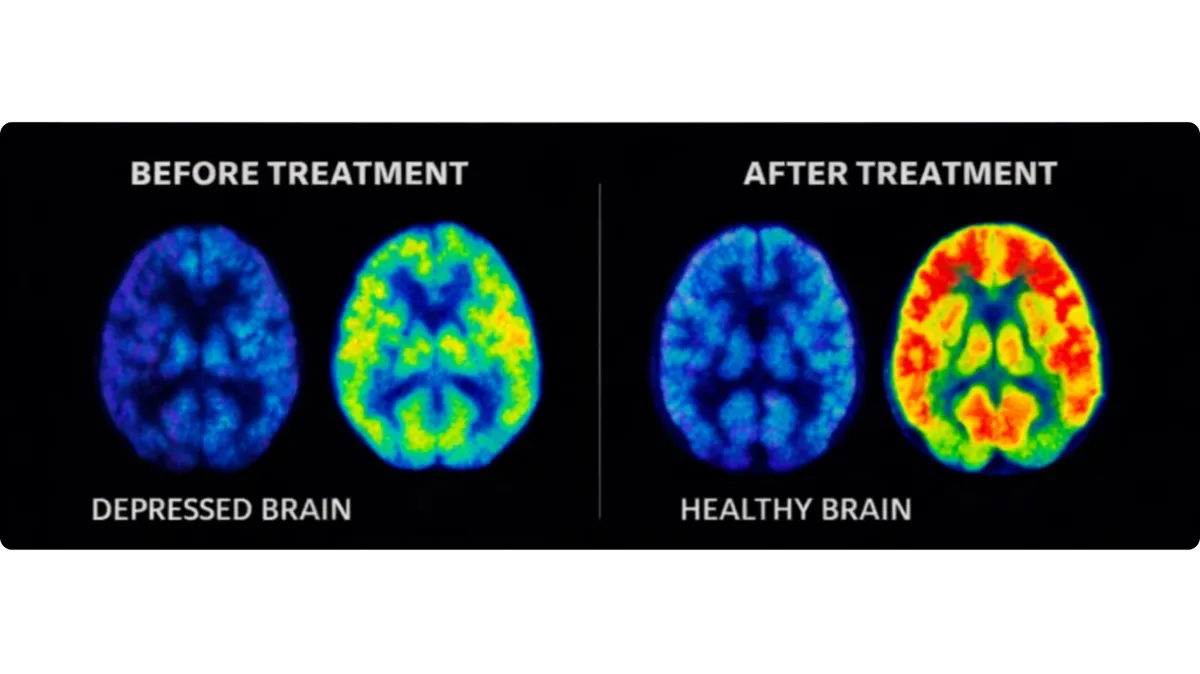
This PET scan shows brain activity with blue/purple for low energy and yellow/red for high. It highlights that a depressed brain is less active than a healthy one and that depression can be restored through treatment.
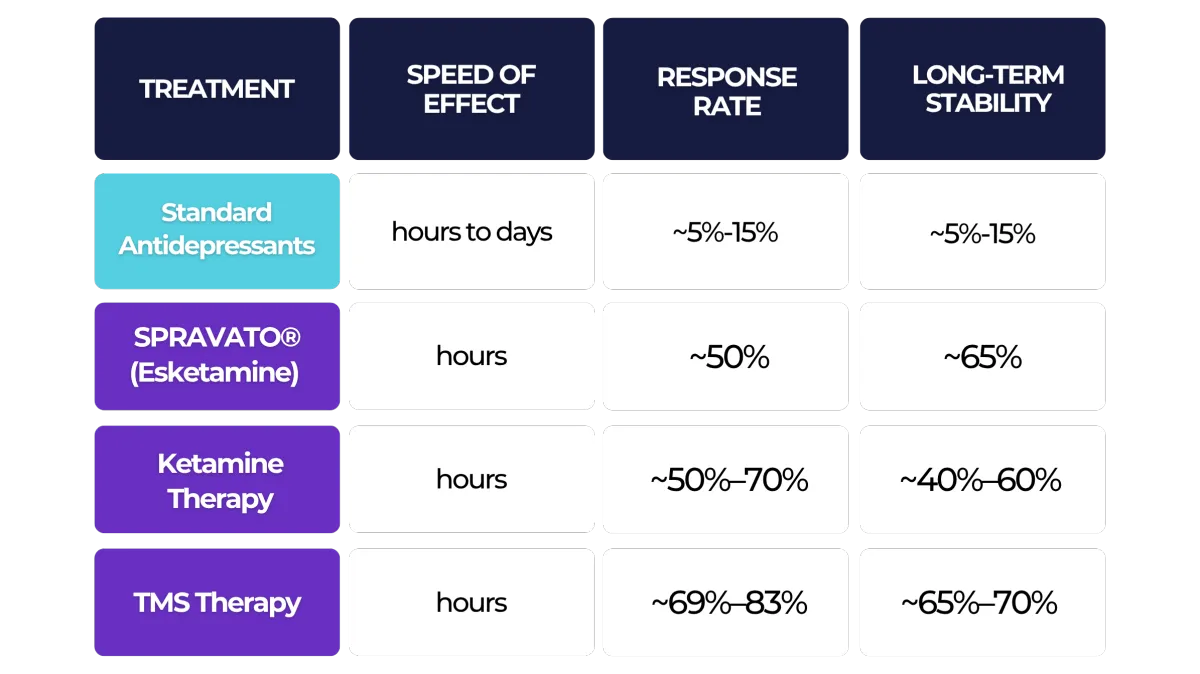
Comparing Advanced & Standard Depression Treatments
Standard Antidepressants:
Speed of Effect: Hours to Days
Response Rate: 5%–15%
Long-Term Stability: 5%–15%
Spravato (Esketamine)
Speed of Effect: Hours
Response Rate: ~50%
Long-Term Stability: ~65%
Ketamine Therapy
Speed of Effect: Hours
Response Rate: ~50%–70%
Long-Term Stability: ~40%–60%
TMS Therapy
Speed of Effect: Hours
Response Rate: ~69%–83%
Long-Term Stability: ~65%–70%
Reach Out Today
Your Mental Health Matters
We understand that every individual’s journey is unique, and we’re here to provide personalized care and support.
TESTIMONIALS
What Patients Are Saying
"Family-Focused Care"
"Dr. Matzkin is kind, patient, and offers many treatment options. He stays calm and nonjudgmental, earning our complete trust."

"Expert & Empathetic"
“Dr. Matzkin combines deep expertise with genuine empathy. The staff are always pleasant and clear in communication."
"Exceptional Care with Heart"
“Attuned addresses underlying issues, provides thoughtful diagnoses, and supports medication guidance—10/10. I love the care I’ve received."
Frequently Asked Questions
What does Attuned Psychiatry do?
We specialize in advanced mental health treatments—including TMS, Ketamine Therapy, Spravato®, and personalized medication management—supported by compassionate clinicians and a holistic approach to long-term healing.
How do I get started with Attuned Psychiatry?
Simply call us or schedule a consultation online. We begin with a detailed evaluation and help you choose the treatment path that aligns best with your goals.
Who is the founder of Attuned Psychiatry?
Attuned Psychiatry was founded by Dr. Gideon Matzkin, MD, ABPN, a board-certified psychiatrist dedicated to innovative, personalized mental health care.
What if I need help after business hours?
For urgent concerns, we provide guidance on accessing immediate support. For non-urgent needs, you can message us through the patient portal, and our team will respond as soon as office hours resume.
How much does treatment at Attuned Psychiatry cost?
TMS costs depend on your chosen protocol (traditional, accelerated, or ONE-D) and insurance coverage. Traditional TMS is generally covered by insurance. Accelerated and ONE-D TMS are not insurance-covered. We review all pricing and options during your consultation to ensure full clarity.
Professional
Affiliations







Start your path to healing
Take the first step toward feeling
better today.

Quick Links
Helpful Links
Contact Details


©️ Copyright 2026 Attuned Psychiatry |
Created By Maeshiko Alenton
Insurances Accepted
Our team can confirm your benefits and guide you through your options.
Conditions
TMS Therapy Treat
Major Depressive Disorder (MDD)
Persistent depression can affect mood, energy, motivation, and daily functioning.
Common signs:
- Persistent sadness
- Loss of interest
- Fatigue
- Difficulty concentrating
Treatment-Resistant Depression (TRD)
Treatment-resistant depression means symptoms continue despite trying at least two antidepressants at adequate dose and duration.
Common signs:
- Persistent sadness
- Ongoing low mood
- Minimal response to medication
- Loss of motivation
Migraines & Headaches
Chronic or severe headaches can impact daily life, causing pain, fatigue, and difficulty functioning. Professional care can help reduce symptoms and improve quality of life.
Common signs:
- Recurrent or intense head pain
- Sensitivity to light or sound
- Nausea or dizziness
- Difficulty concentrating or performing daily tasks
Treatment Option:
- TMS may help for certain chronic migraine patterns
PTSD
Post-traumatic stress disorder may develop after trauma and can affect mood, sleep, and sense of safety.
Common signs:
- Flashbacks
- Nightmares
- Hypervigilance
- Avoidance
OCD
Obsessive-compulsive disorder involves intrusive thoughts and repetitive behaviors that can interfere with daily life.
Common signs:
- Intrusive thoughts
- Repetitive checking
- Excessive cleaning
- Mental rituals
Anxiety
Anxiety can cause persistent worry, physical tension, and difficulty managing daily stress. Advanced therapies may help when symptoms remain severe.
Common signs:
- Excessive worry
- Restlessness
- Muscle tension
- Racing thoughts
Trauma-Related Symptoms
Trauma can affect emotional regulation, safety, and daily functioning long after a difficult experience.
Common signs:
- Emotional numbness
- Hypervigilance
- Irritability
- Avoidance
Sleep Disturbances
Sleep problems often occur alongside depression, anxiety, and trauma-related conditions. Improving the underlying condition may improve sleep.
Common signs:
- Difficulty falling asleep
- Frequent waking
- Early morning waking
- Daytime fatigue
A Non Medication Pathway to Lasting Relief
TMS (Transcranial Magnetic Stimulation) Therapy
for Depression and Mood Disorders
TMS is a safe, non-invasive, and highly effective therapy for individuals struggling with depression and mood disorders—especially when traditional treatments haven’t brought meaningful improvement. Using gentle, targeted magnetic pulses, TMS activates the areas of the brain responsible for regulating mood, helping restore healthy neural activity.
By reawakening these pathways, TMS can reduce depressive symptoms, sharpen focus, improve emotional balance, and increase daily motivation. Many patients begin to feel more hopeful, more present, and more like themselves again as treatment progresses.
At Attuned Psychiatry, every TMS session takes place in a calm and supportive environment. Our clinical team guides your care with compassion and precision, ensuring comfort, safety, and steady progress throughout the entire process.
Why Choose Us for TMS Therapy?
How TMS Therapy Works
TMS is non-invasive and requires
no anesthesia or sedation.
You can drive yourself to and from sessions and
resume daily activities immediately.
During treatment, you’ll sit comfortably while the TMS coil is positioned over specific areas of the brain. You may hear clicking sounds or feel a tapping sensation, which most patients find very tolerable. Mild headaches can occur during the first few sessions but typically resolve quickly.
Brain Changes After
Advanced Depression Treatments
This PET scan shows brain activity using color, where blue and purple represent low energy and yellow and red represent high energy. It illustrates how a "depressed" brain is physically less active—essentially dimmed down—while a "healthy" brain is vibrant and fully engaged. The comparison highlights that depression is a biological state, but one that can be "recharged" and restored through treatment.
Comparing Advanced and Standard
Depression Treatments
What to Expect on Your
Care Journey
Reach Out Today
Your Mental Health Matters
We recognize that every individual’s journey is unique, and we’re here to provide personalized care and support.
TESTIMONIALS
What Patients Are Saying
"Compassionate Family Care"
"Dr. Matzkin’s thorough, thoughtful approach shows his expertise. He listens carefully and provides solutions tailored to each individual. I highly recommend him for anyone seeking compassionate psychiatric care."
"Outstanding, Patient-Centered Care"
"Finding psychiatric care in Atlanta has been a challenge, but Dr. Matzkin is a game-changer. He listens, explains treatments clearly, and ensures continuity of care. Rain, his assistant, keeps the office running smoothly. Communication is always fast and clear."
"Exceptional Care with Heart"
"I’ve been a patient of Dr. Gideon Matzkin for several years and am deeply grateful. His remarkable expertise is matched by genuine empathy, and the staff are consistently pleasant, polite, and clear."
"Expert, Compassionate Support"
“Dr. Matzkin’s thorough, thoughtful approach shows his expertise. He listens carefully and provides solutions tailored to each individual. I highly recommend him for anyone seeking compassionate psychiatric care.”
Frequently Asked Questions
What is TMS Therapy?
Transcranial Magnetic Stimulation (TMS) is a non-invasive, non-medication treatment for depression. It uses gentle magnetic pulses to stimulate specific brain areas that regulate mood, helping your brain restore healthier patterns.
Is TMS covered by insurance?
Yes. Many plans provide coverage. Our team helps verify benefits before treatment begins.
How long is each session?
Sessions typically last 20–40 minutes, and you can return to your normal activities immediately afterward. No anesthesia or sedation is required.
How fast can TMS work?
Some patients notice early improvements within the first few weeks, while others experience gradual benefits over the full course of treatment. Results vary by individual.
Does TMS hurt?
Most people feel a light tapping or clicking sensation on the scalp. It’s generally well-tolerated, and any mild discomfort usually eases after the first few sessions.
Can I drive after treatment?
Yes. TMS does not affect alertness, so you can drive yourself to and from appointments.
Start Your Path to Healing
Take the first step toward feeling
better today.
Quick Links
Helpful Links
Contact Details
©️ Copyright 2026 Attuned Psychiatry | Created By Maeshiko Alenton